
A Gospel Written in Blood
Corven The Blood Saint
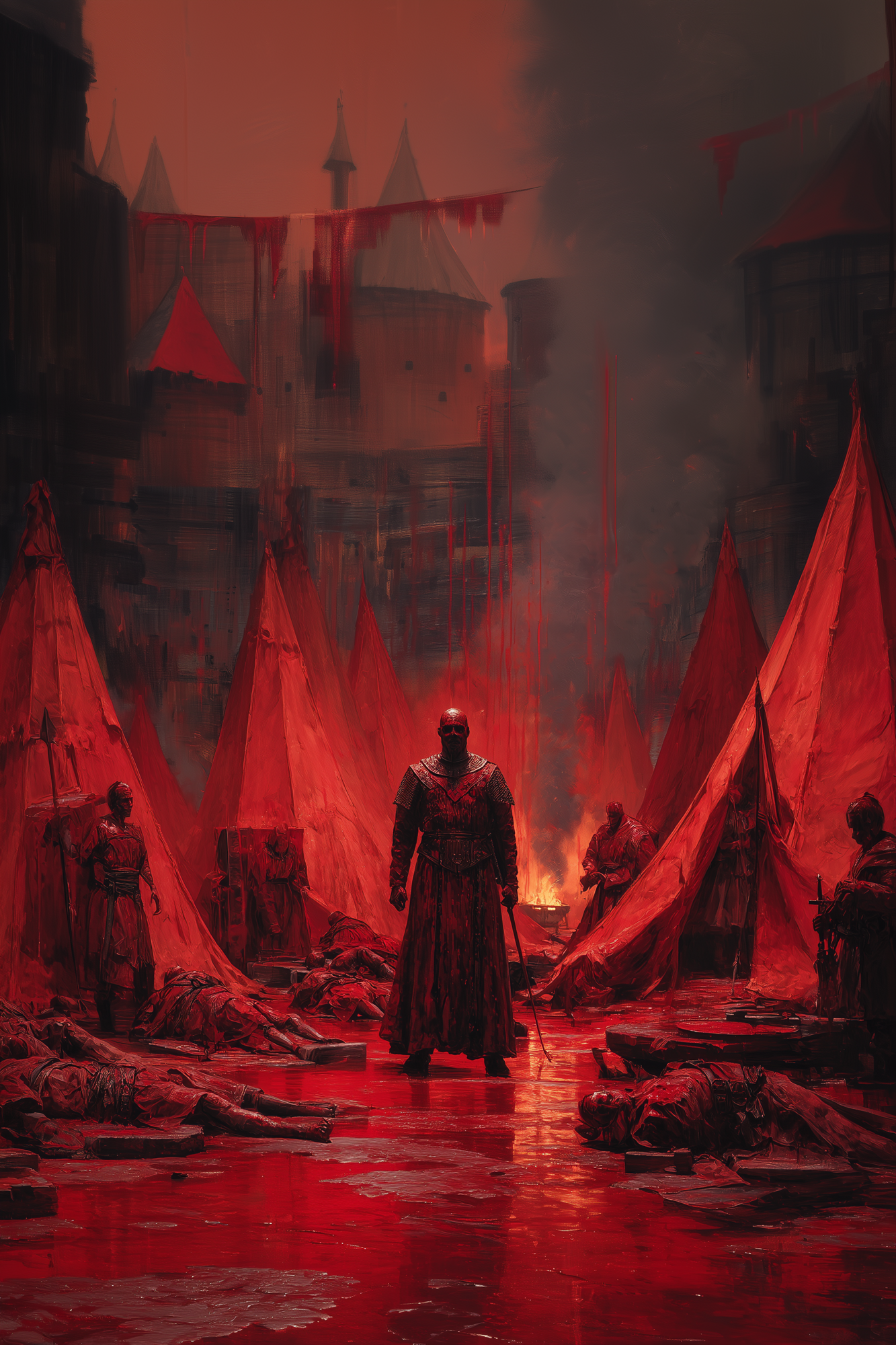
I. THE ONES WHO WERE LEFT
Before the wars learned his name, before banners bled red in his wake, there were only the unwanted.
The sick who could not be cured.
The wounded who would never fully heal.
The broken whose blood no longer carried them forward.
They gathered at the edges of cities and faiths, beneath banners that promised mercy but delivered silence. Physicians refused them. Temples turned them away. Even war had no use for bodies that could not march, lift, or bleed properly.
They were not dying fast enough to be mourned, and not healthy enough to be claimed.
That was when he came to them.
He did not arrive as a prophet.
He did not speak of salvation.
He spoke of exchange.
II. THE RULE THAT CANNOT BE BROKEN
The Blood Saint never promised miracles. He promised balance.
He taught them the rule first, before any oath was taken.
Nothing is given unless it is taken.
Nothing is healed unless something else bleeds.
He could not create blood.
He could not summon it from air, earth, or prayer.
He could only move it, shape it, refine it.
For every life prolonged, another would be shortened.
For every wound closed, another would be opened.
Those who could not accept this left.
Those who remained became his followers.
Not because they believed in him.
But because he did not lie.
III. THE EXECUTIONERS
From among the sickest, the most ruined, the Blood Saint selected those whose bodies could still endure pressure.
They were not chosen for strength.
They were chosen for tolerance.
Their blood was already broken, already unstable, already incompatible with peace. Through ritual circulation and relentless combat, their bodies were reshaped into living conduits, capable of drawing in foreign blood, forcing it through violent filtration, and surviving long enough for something usable to emerge.
These became the executioners.
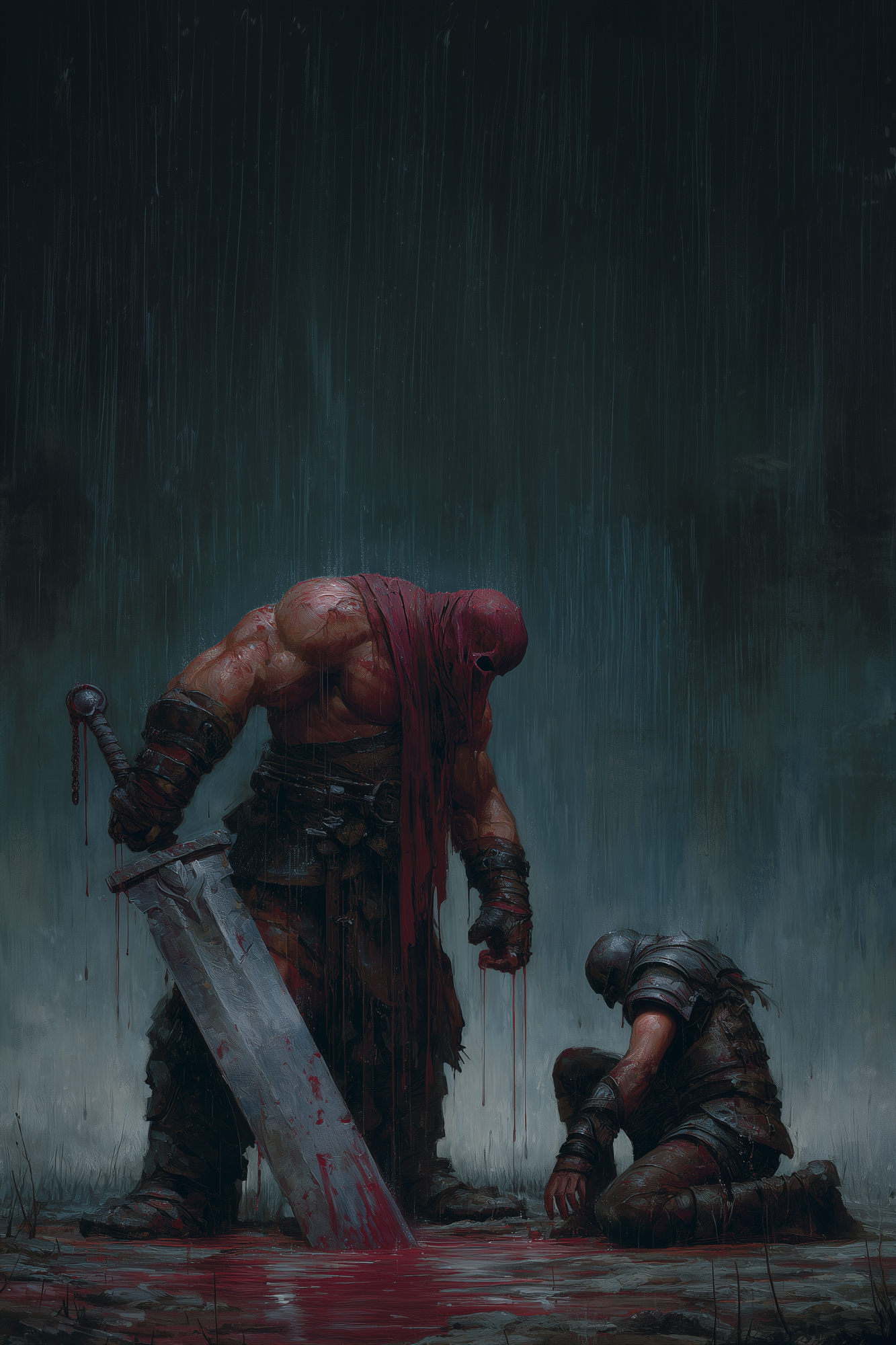
They wielded massive blades not for elegance, but for inevitability. Their strikes were not swift, but final. Every blow forced blood into motion, out of hiding, into circulation where it could be tested.
Most executioners died within their first campaigns.
Some lasted longer.
None were ever cured.
They did not fight for victory.
They fought to feed the system.
IV. THE BLOOD CROWN
As the wars multiplied, so did the strain.
Blood passed through the Saint again and again, refined, redirected, stripped of its failures. His body adapted. Then it hardened. Then it changed.
The crown formed not as a symbol, but as residue.
Compressed blood, unable to retreat, fused into a continuous ring around his skull. It did not cut into his flesh. It did not wound him. It settled, heavy and stable, pulsing with restrained pressure.
From beneath it, blood shaped his face into something no longer entirely human. Not bone. Not mask. But a remembered skull, imposed by circulation alone.
Those who saw him said the same thing.
He no longer wore authority.
Authority had grown into him.
V. THE BATTLEFIELD MIRACLE
The Blood Saint’s miracles only occurred in war.
As battle raged, blood was drawn from the enemy, forced into motion by blade and fear. The executioners absorbed it under extreme strain, their bodies acting as violent crucibles. From them, the Saint drew what survived.
That blood was never pure.
It was usable.
Behind the lines, the sick waited.
Blood was transferred slowly, carefully, never all at once. Some healed. Some stabilized. Some merely survived long enough to walk again.
When the battle ended, the flow stopped.
Those who had not received enough blood were left as they were. Some cursed him for it. Others thanked him for the time they were given.
He accepted neither.
VI. MERCENARIES OF NECESSITY
Kings and city-states learned quickly.
If they hired the Blood Saint, they did not just hire soldiers. They hired a logistical miracle.
His forces could fight cursed enemies.
They could endure fields where magic poisoned the air.
They could sustain casualties no ordinary army could recover from.
The price was always the same.
He kept the blood.
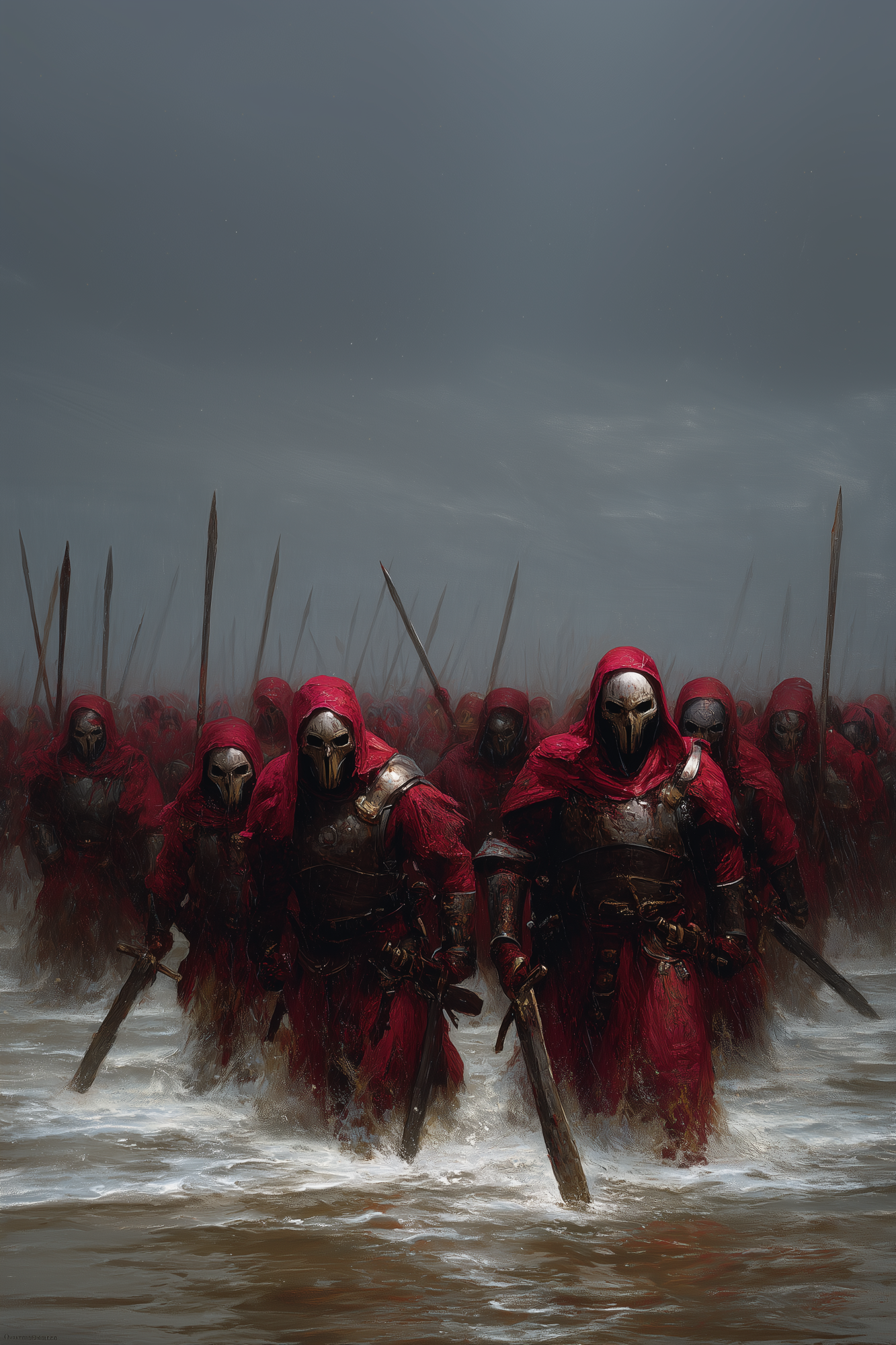
The battlefield did not belong to the victor.
It belonged to the Saint.
Those who refused his terms never hired him again.
Those who accepted them rarely did.
But when wars turned desperate, his banners were always found again.
VII. THE TRUTH HE NEVER HID
The Blood Saint knows what he is doing.
He knows that his work does not save the world.
He knows that his system ensures war never truly ends.
He knows that peace would kill his followers faster than any enemy blade.
He does not justify this.
He simply states it.
If the wars end, the blood stops.
If the blood stops, the sick die.
He did not choose this role because it was righteous.
He chose it because no one else would.
VIII. WHAT THE ARCHIVES RECORD
Some codices name him a saint.
Others name him a butcher.
Most refuse to name him at all.
But every archive agrees on one thing.
Where he walked, the dying lived longer.
Where he stayed, wars never truly healed.
And when he finally leaves a battlefield, his followers trail behind him, some walking on borrowed blood, some carried, some already failing again.
He does not look back.
There will always be another war.
There will always be more blood to move.
He did not die for the world.
He made the world bleed for the dying.
IX. THE RED EVANGEL
Recorded by one who still lived after the battle
I was not among the strong.
My blood failed me long before my legs did. It thickened, soured, turned against my own veins. The healers said it was inherited. The priests said it was deserved. The generals said I was useless.
When the Blood Saint arrived, no one cheered. No one knelt.
We waited.
He did not ask our names.
He did not bless us.
He told us the rule.
Nothing is given unless it is taken.
Behind him, the executioners prepared for battle. Their bodies were wrong, swollen with circulation, masks soaked dark before the fighting even began. They did not look at us. They looked forward, as if already bleeding.
When the fighting started, the ground shook. I felt it through my bones. I felt blood being pulled from somewhere far away, dragged screaming through bodies I would never see.
The Blood Saint stood among us.
He did not raise his hands.
He did not pray.
Blood moved.
It came slowly. Always slowly. Not enough to save everyone. Never enough to feel safe. When it entered me, it burned. Not like fire, but like pressure, like something forcing its way into a place that had forgotten how to hold it.
Some screamed. Some begged him to stop.
He did not.
When the battle ended, the blood stopped too.
Those who had received enough stood.
Those who had not were quiet.
I lived.
Not because I deserved it.
Not because I believed.
But because enough blood had survived the fight.
When we asked him why he did this, he answered without anger or pride.
If I stop, you die.
That was the only promise he ever made.
X. ARCHIVAL FRAGMENT
Fragment 7.13, recovered from a burned campaign codex
They thought he was holy because the dying followed him.
They were wrong.
The dying follow anyone who tells the truth about their condition.
He does not cure.
He reallocates.
He does not save lives.
He delays endings by forcing others to arrive sooner.
The executioners are not his disciples.
They are his filters.
The sick are not his faithful.
They are his responsibility.
And the wars that follow him do not burn hotter.
They simply never cool.
If he is stopped, thousands will die in silence.
If he continues, thousands will die screaming.
The Archives record no moral verdict.
Only this.
Where his banner rises, the dying walk again.
Where it falls, the ground is never clean.