
EXILE MADE FUNCTION
THE KIN OF THE DEEP CANOPY
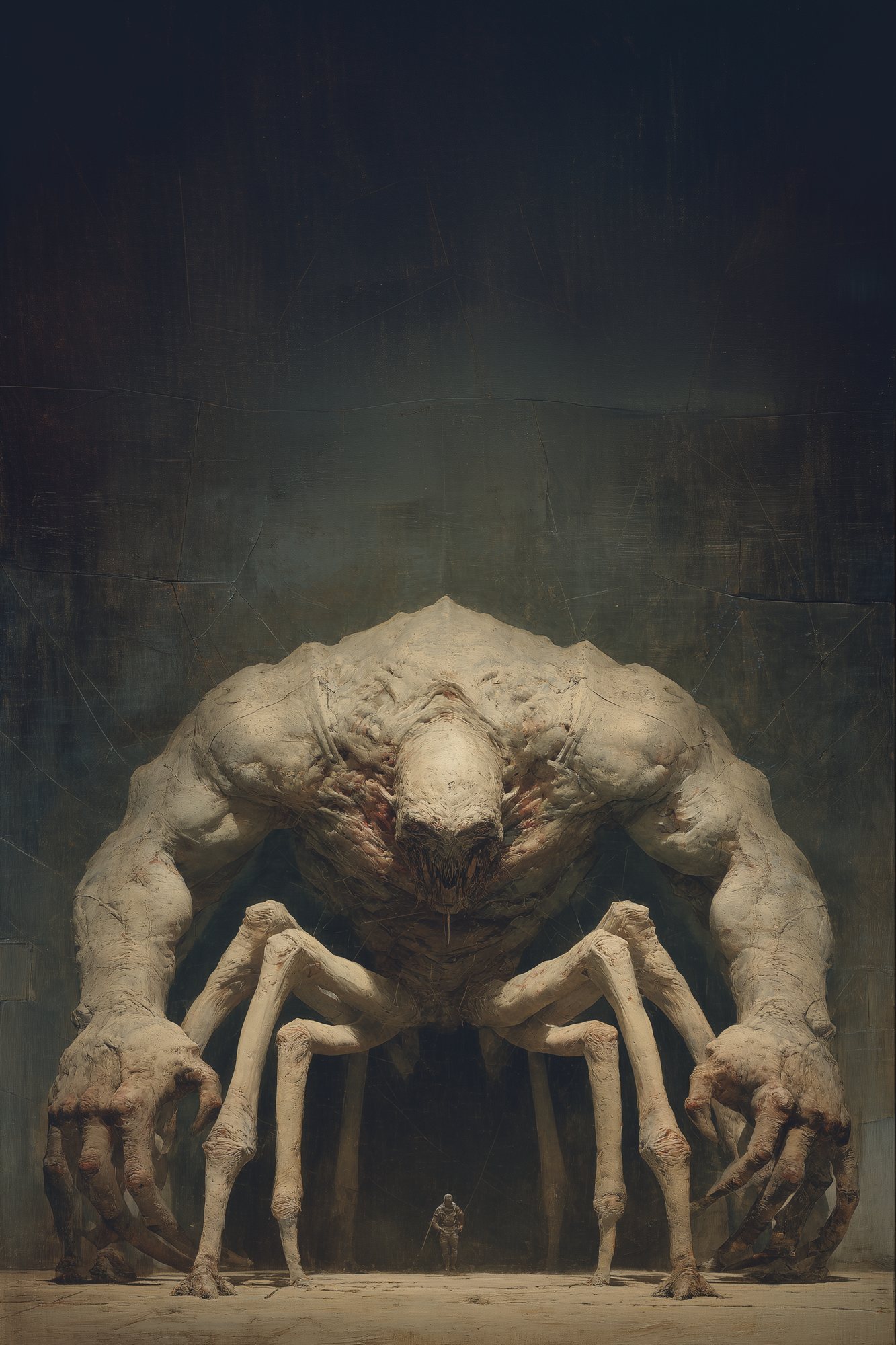
Varketh and the Architecture of Survival
I. THE LINE THAT FAILED
They were not cast out for belief or dissent.
They were removed because they failed too often.
Their bodies healed slowly. Wounds stayed open longer than they should. Fevers lingered. Bones knit wrong. Where others recovered and returned to function, they required time, attention, and accommodation.
They were counted last.
Varketh learned to recognize the pause before his name. The moment when eyes shifted away, calculations finished, and relief passed quietly through those who would remain. It was never spoken aloud, but it was always there.
No one argued.
The decision was framed as necessity. One burden removed meant many carried less. It was said calmly. Kindly, even. As if that changed anything.
They were given supplies measured to ease conscience. Enough to delay guilt. Not enough to ensure survival.
They were told it was temporary.
No one followed.
II. EXILE WITHOUT RETURN
At first, they waited.
They rationed food carefully. Marked paths. Built small signs meant to be seen from a distance. Fires were kept low but visible. Calls were spaced, patient, hopeful.
Days passed. Then weeks.
No one suggested turning back.
That was when understanding settled in. The exile had not begun at the jungle’s edge. It had begun at the moment no one looked behind them.
Trust did not shatter.
It drained away.
From that point on, every other people became the same in their eyes. Those who shed weakness when it became inconvenient. Those who survived by renaming abandonment as mercy.
Varketh stopped listening for footsteps.
III. THE JUNGLE DOES NOT CARE
The jungle did not punish them.
It tested them.
Infection took the slow. Falls took the uncertain. Hunger took the generous.
Wounds stayed wet. Insects entered flesh before blood could dry. Skin closed while already in use, torn open again by movement before it could seal.
Sleep became a liability. Stillness invited death.
They learned to move without sound. To cling before they stood. To distribute weight across bark, stone, and ruin. Upright posture became rare. Balance mattered more than height.
Children born beneath the canopy adapted faster than adults ever could. They reached for surfaces instinctively. Grip replaced stance. Reaction replaced strength.
The jungle did not change them.
It filtered them.
Varketh learned which deaths followed hesitation and which followed refusal to stop.
IV. THE PARASITIC ENTRY
It was not the jungle that altered them.
It entered through them.
Parasites found purchase in wounds that never closed, in flesh that healed incorrectly, in bodies already under constant strain. Small lives embedded themselves where the boundary between repair and invasion no longer held.
At first, it felt like swelling. Fever. Pressure beneath the skin.
Then something moved.
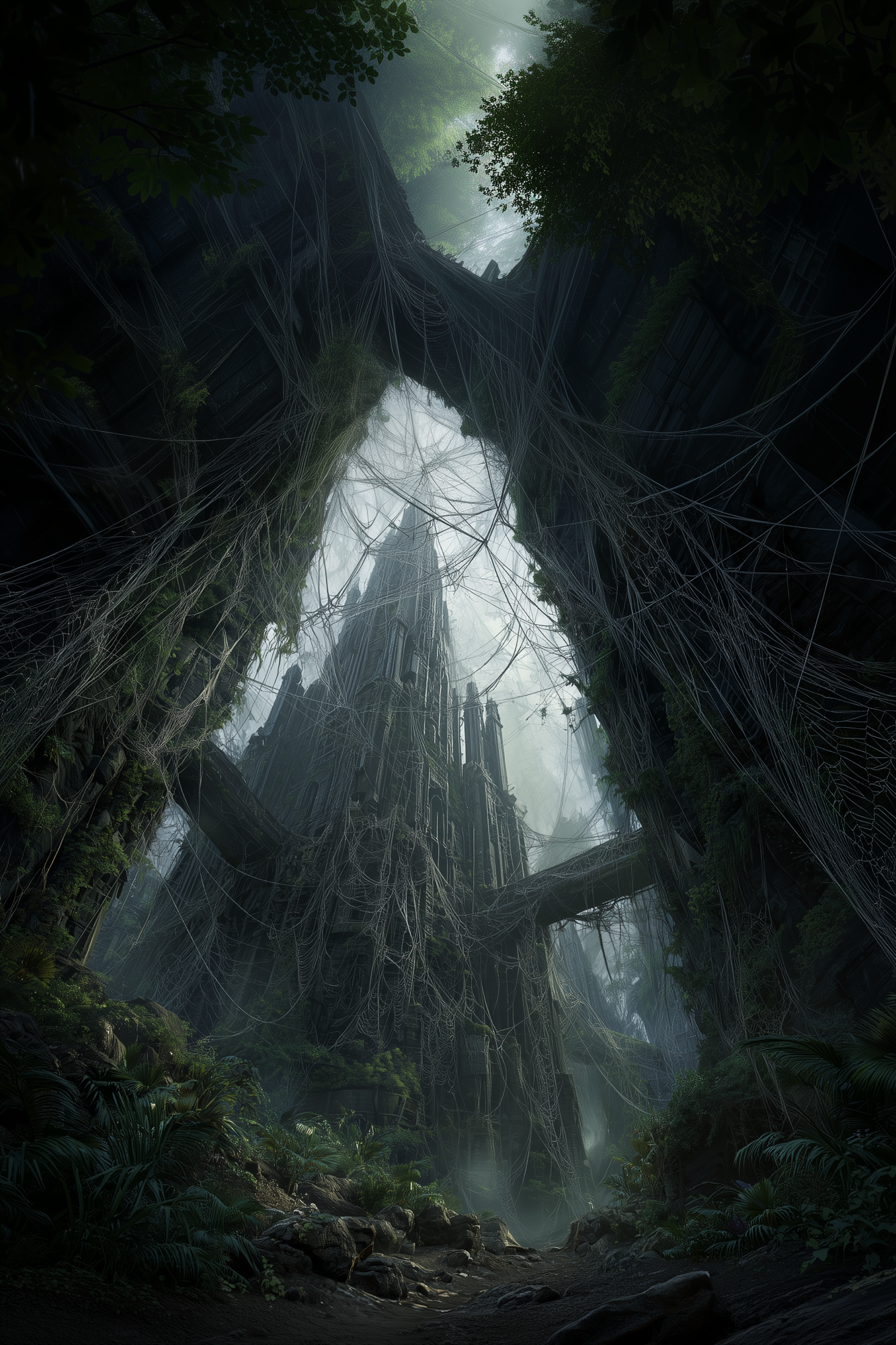
The first time it happened, they thought the man was dying.
He screamed until his voice broke. Tissue split sideways along his ribs. Bone bent under pressure as something forced space where no joint should exist. Segmented movement rippled beneath slick skin, blind and wrong.
They held him down while he begged them to cut it off.
It moved while they watched.
Someone vomited.
Someone ran.
They hacked at the limb. He bled until his body failed.
No one slept that night.
When it happened again, the screaming started sooner.
Fear spread faster than infection. People watched one another for swelling. Any fever became suspicion. Any pain became terror. Touch vanished. Sleep fractured.
Some tried to cut themselves open early, hoping to stop it before it finished.
They died.
V. THE FIRST TO ENDURE
Varketh saw what resistance did.
He watched others bind new growths tight, forcing their bodies to remain narrow, upright, human. They slipped. They fell. They broke against stone that no longer forgave mistakes.
He watched others cut until blood loss finished what fear had started.
When it happened to him, they tried to restrain him.
Hands forced him down. Weight pressed into his chest. Voices shouted to hold him still.
The growth tore free along his side in uneven spasms. Pain flared so sharply his vision narrowed. Something jointed forced itself into space beneath his ribs, built for pressure, not reach.
The new limb reacted before thought.
It hooked.
It pulled.
It compressed.
Bone failed.
Varketh did not understand what had happened until the weight was gone.
Two bodies lay twisted beneath him. Necks bent wrong. Movement finished.
He stayed where he was, breathing hard, the pain still tearing through him.
The limb did not loosen.
It held.
For the first time in his life, strain did not end in collapse.
The pain remained.
But the failure did not.
Varketh placed the limb again.
It worked.
He did not fight it after that.
They did not restrain another after that.
VI. BODIES THAT REMAIN
Healing never completed.
Bones set while the body was already moving. Joints adapted under load, not rest. Pain hardened into structure.
Limbs no longer grew in pairs.
Some split low along the ribs, thick and short, built only to press weight into stone. Others grew from shoulder and spine, never reaching outward, only bracing. Legs bent forward, backward, sideways, whatever angle prevented collapse.
Bodies became layered. Some limbs worked. Others bore. Some never moved at all.
Those who could not tolerate the strain failed quickly.
Those who could remained.
Varketh carried more weight than any of them. Scar layered on scar. Structure built atop compromise. He did not grow elegant.
He grew massive.
Others learned to climb.
Varketh learned to anchor.
VII. INHERITANCE
The parasites did not stop with survival.
Bodies that endured long enough reproduced. Bodies that failed did not. No signal marked the moment this became pattern. It happened because nothing interrupted it.
Children were born altered.
Not infected.
Already shaped.
Some entered the world with limbs folded close to the torso, joints compressed inward as if the body expected weight immediately. Small, dense supports ran along ribs and spine, already pressing downward, already useful. Others were born with legs bent against symmetry, knees turned where balance demanded, not where anatomy once allowed.
They did not learn to stand.
They spread.
Infant bodies pressed into bark and stone before their eyes could focus. Fingers searched for cracks. Knees locked sideways. Weight distributed across too many points to fail easily.
Some children did not last days. Their bodies could not tolerate the strain their own structure demanded. Breath shortened. Movement failed. They were taken quickly.
No one named it tragedy.
Variation became extreme. No two bodies mirrored one another. What persisted was not appearance, but function. Grip that did not slip. Pressure that did not give. Weight that did not collapse.
The parasites were no longer foreign.
They were inheritance.
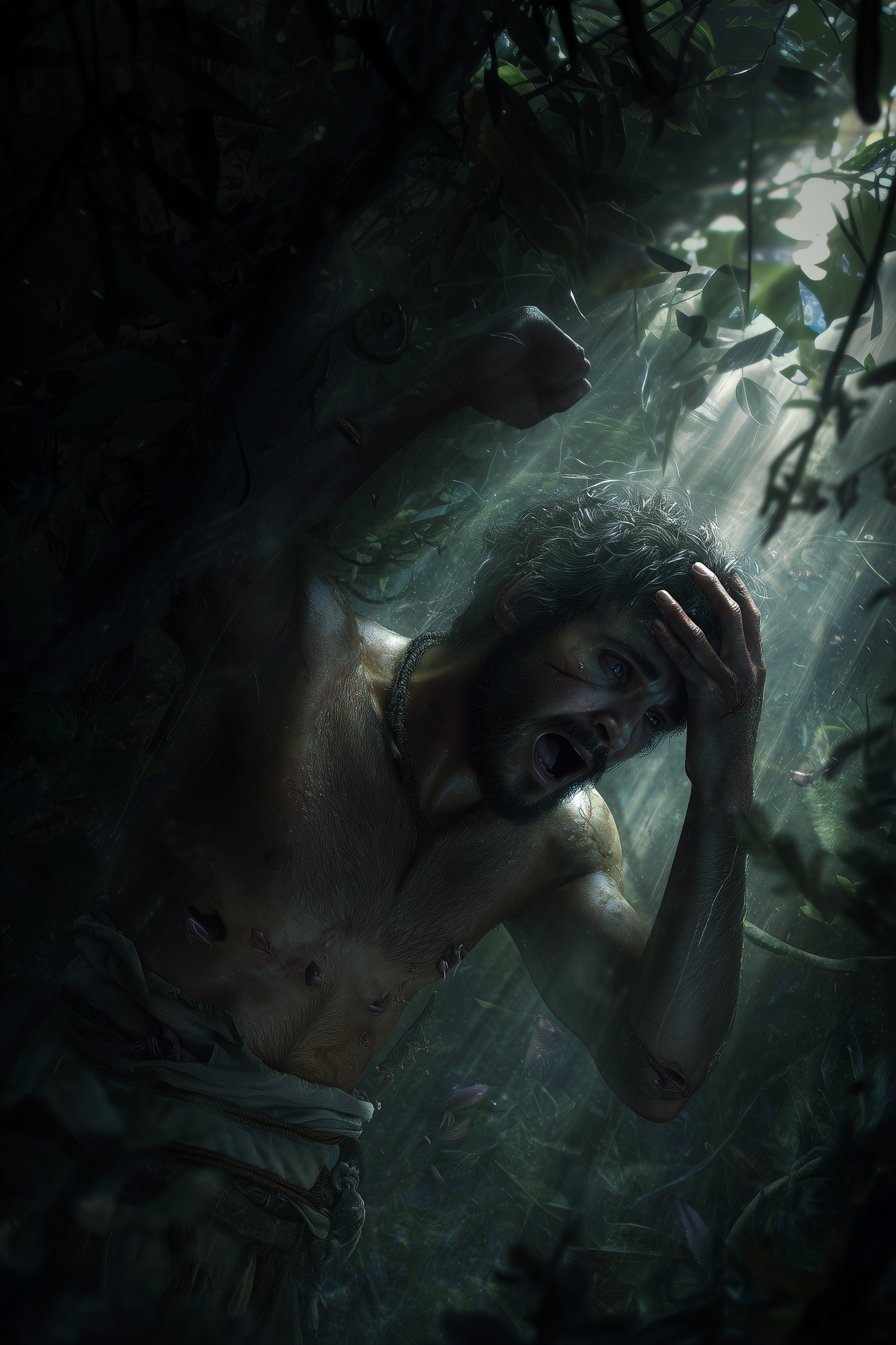
VIII. DEAD WEIGHT
Weakness returned with every generation.
Some bodies slowed the group. Some froze when response was required. Some demanded watching, guiding, waiting.
Waiting killed.
Dead weight was never abstract. It had mass. It dragged. It forced others to brace longer, to hold harder, to absorb strain meant to be shared.
Hunger followed strain.
When movement slowed, bodies were taken apart. Not ceremonially. Not with anger. Hands went to joints. Limbs were separated where they bore least weight. Flesh was consumed because energy could not be wasted.
No one argued.
They remembered what it meant to be measured, found insufficient, and removed politely, slowly, with words meant to soften the end.
They refused delay.
Those who could not function were taken in. Those who remained learned quickly. Those who resisted were finished faster.
The group moved on.
IX. STRUCTURE OF THE KIN
Order formed without decree.
The Hesitant retained mostly human silhouettes. Narrow frames. Fewer points of contact. They paused between stimulus and response, trying to reinsert judgment where timing mattered.
They did not last.
The Shaped learned placement. Each limb served a task. Some held. Some pulled. Some bore weight and never moved. They functioned as systems rather than individuals, distributing effort until strain dissolved.
They became the working body of the kin.
The Broken Lords did not pause at all. Their bodies answered every vibration, every pressure shift. Too many joints. Too many angles. They reacted constantly, unable to remain still.
They were not honored.
They were used.
Fear followed them. The kin directed them where resistance needed to end quickly.
X. VARKETH — MASS
Varketh did not become Overhead by agreement.
He accumulated.
He was placed where failure would collapse structure. Beneath shifting stone. At the front of climbs where grip failed most often. Used as anchor when others slipped, when weight surged, when surfaces gave way.
His body responded.
Support limbs thickened along spine and flank. Short, dense growths pressed downward, never reaching, only bearing. His frame widened. Movement slowed, but did not stop.
Others avoided strain.
Varketh absorbed it.
He began removing weight before collapse.
At first, it was reactive. A body slowed the group. Varketh closed distance, compressed, ended function. The motion was direct. The result final.
No explanation followed.
The second time, no one intervened.
By the third, the kin began stepping aside when he moved.
XI. RUTHLESS INSTINCT
Brutality did not arrive as belief.
It arrived as repetition.
Varketh learned to read failure before it happened. In posture. In hesitation. In how weight shifted too late.
He stopped waiting.
Bodies that threatened movement were taken apart early. Hunger made use of them. The group did not slow.
Some protested. Briefly.
They were consumed where they stood.
After that, no one spoke when Varketh moved.
He did not punish.
He fed.
Space reorganized around him. Paths adjusted. Positions shifted. Others learned to move where he would not need to.
He did not need to threaten.
He was already unavoidable.
XII. TERRITORY — SENSE AND LOAD
The kin do not mark borders.
They feel them.
Vibration travels through ruin and root. Tension carries through fiber pulled tight across stone. Movement that does not belong registers as pressure long before it is seen.
Anything that enters becomes load.
They do not rush intrusion. They allow it to deepen. Weight settles where it will be easiest to hold. Paths narrow. Surfaces tilt. Space is shaped until movement becomes effort.
Instinct answers first.
Hunger follows.
Bodies shift before intent forms. Limbs engage where mass presents itself. What cannot be stabilized is immobilized. What resists is reduced until resistance ends.
Prey is not chosen.
It is identified.
XIII. THE RUINS — NEST AND ANGLE
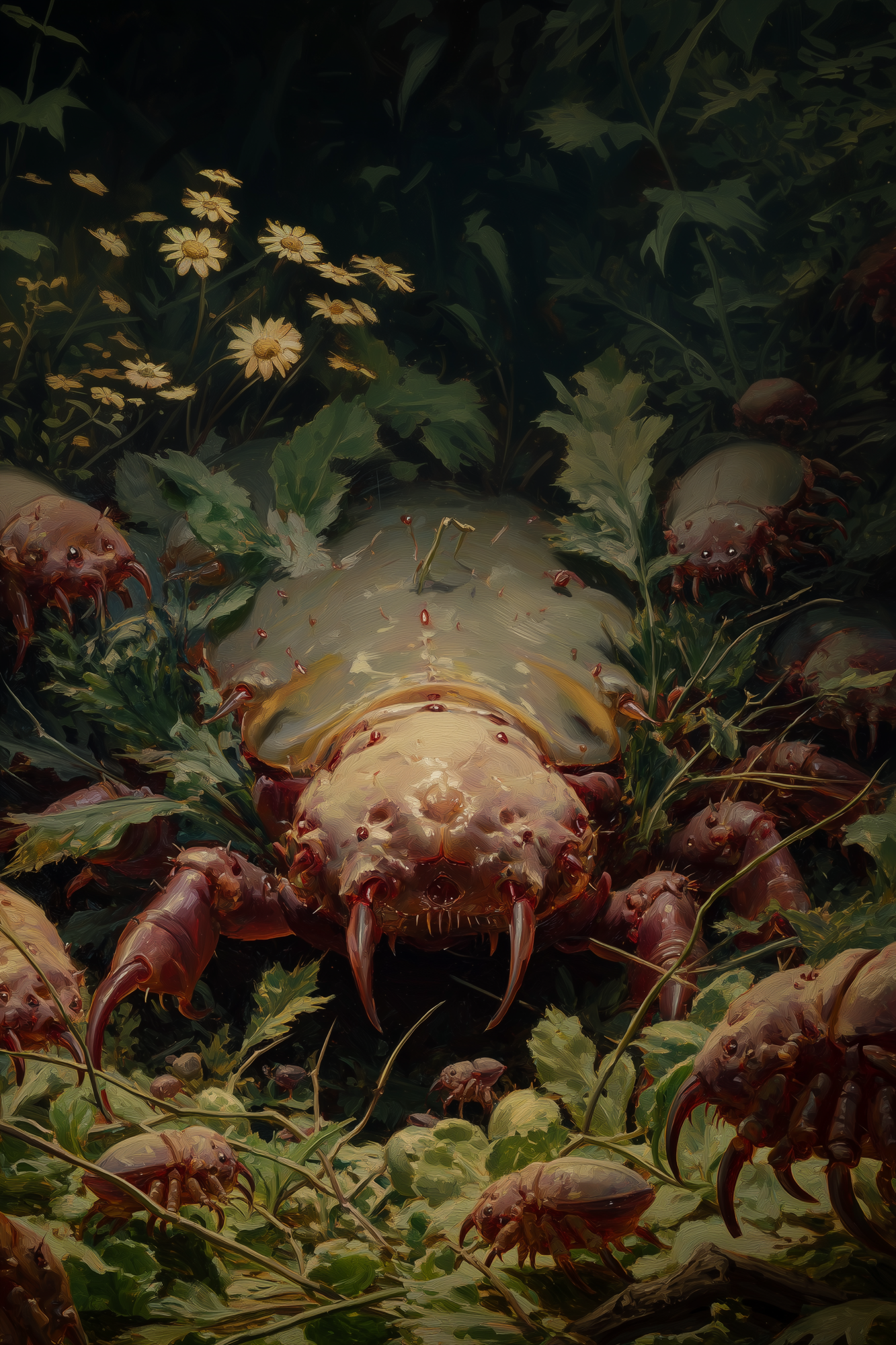
Human ruins rot slowly beneath the canopy.
Collapsed fortresses. Broken temples. Stone raised to impose order, now split and hollowed. Walls meant to stand alone now serve as anchors.
The kin live inside these failures.
They thread the spaces with fiber, bone, and webbing pulled tight across angles meant for walking upright. Floors lose meaning. Ceilings become ground. Shafts and cracks are widened, lined, connected.
Hollows open behind walls. Cavities form beneath steps. Passages narrow where shoulders once passed easily.
Spind is not used to trap.
It delays.
It redirects.
It forces bodies into angles that make holding easier.
Those who enter still stand upright. They still believe in forward movement. They still trust the ground beneath their feet.
The kin remember that posture.
XIV. HUMANS — THE FIRST CUT
Other creatures are intrusion.
Humans are confirmation.
They are recognized by movement before shape. By the way they carry themselves as if the world will adjust. By the way they expect time to be given.
Humans are not offered delay.
Voices vanish first. Leaders disappear before orders can be repeated. Formation breaks without sound. Those who freeze are taken quickly. Those who fight last longer, but not much.
There is no shouting.
No challenge.
No negotiation.
The jungle took many things from the kin.
Humans made the first cut.
XV. WAR — HUNGER AND NOISE
They do not go to war.
They feed.
Movement through their territory triggers response. Bodies answer before intent forms. Hunger sharpens timing. Noise fixes direction.
Sometimes, they allow themselves to be heard.
A sound rolls through ruin and canopy. Low. Broken. Pulled from deep inside a chest built to carry too much mass. It does not sound like a threat.
It sounds wrong.
Those who hear it mistake it for confidence, for arrogance, for a challenge offered too early. Attention narrows. Weapons lift. Steps turn toward the sound.
The kin do not follow it.
They spread.
While focus fixes on noise, pressure arrives from everywhere else. Limbs take joints. Weight finds balance points. Movement is removed before killing begins.
When resistance ends, feeding follows.
The sound stops.
XVI. WITNESS ACCOUNT — RECOVERED STATEMENT
(found scratched into stone and fiber, incomplete)
We thought they were gone.
No tracks. No sound.
Then we heard it.
A laugh.
Not loud. Not close.
Deep. Broken. Wrong.
Someone said it came from the ruin ahead.
Someone said it was meant to draw us out.
We moved toward it.
Keral stopped answering before we reached the sound.
I turned to speak to him and found his place empty.
Not blood. Not signs of struggle.
Just absence.
The laugh came again.
Closer this time.
We tightened formation. Too late.
They took us apart without noise.
Limbs everywhere. Not striking. Holding.
I am pinned.
Something has my legs. Something else my arms. The weight is exact. It is placed where I cannot move without breaking myself.
I can hear them moving above me.
I can feel them deciding.
I do not think they know I am writing this.
Or they do not care.
The laugh is close now.
If anyone finds this, do not—
(the mark ends here)
XVII. VARKETH — OVERHEAD
Varketh does not chase.
When noise is used, it comes from him.
His body does not move quickly. It does not need to. Support limbs brace along stone and root. His frame spreads where ground is unstable, compressing into surface until it holds.
While attention fixes on him, the others close from every angle that does not make noise.
He laughs rarely.
Only when hunger is high.
Only when prey needs direction.
When weight is finished, he falls silent again.
FINAL CODEX ANNOTATION
Central Archive Fragment
The Kin of the Deep Canopy are not the result of deliberate design.
They emerged from sustained parasitic integration under high-load survival conditions. Early mutation events show extreme lethality. Survivability increased only where resistance ceased and functional use followed.
ARCHIVAL COMMENTARY
Classification: Adaptive Predatory Line
Status: Active
Territorial Range: Dense canopy ruins and subsurface jungle structures
Observed Overhead: Varketh
The Kin exhibit a persistent hybridization of human cognitive patterning and arthropod-derived response architecture. Decision latency approaches zero in contact scenarios. Behavioral output is governed by stimulus, pressure, and hunger rather than deliberation.
Social organization is emergent, not ideological.
Internal removal of non-functional members shows no evidence of ritualization or moral framing. Consumption correlates with energy recovery and load reduction.
Varketh functions as a structural focal point rather than a leader in conventional terms. His role is defined by mass distribution, response initiation, and spatial reorganization during engagement. Vocalization events attributed to him operate as attentional disruption in prey species.
Emotional distress recorded in early witness material is to be treated as transitional noise. It does not alter the operational profile.
The significance of the Kin lies in this alone:
They demonstrate that human cognition can persist after surrendering bodily symmetry, moral hesitation, and individual primacy.
(no further markings were found)