
A STRUCTURE BUILT AGAINST PERSISTENCE
THE ORDER OF THE RADIANT GRIEF
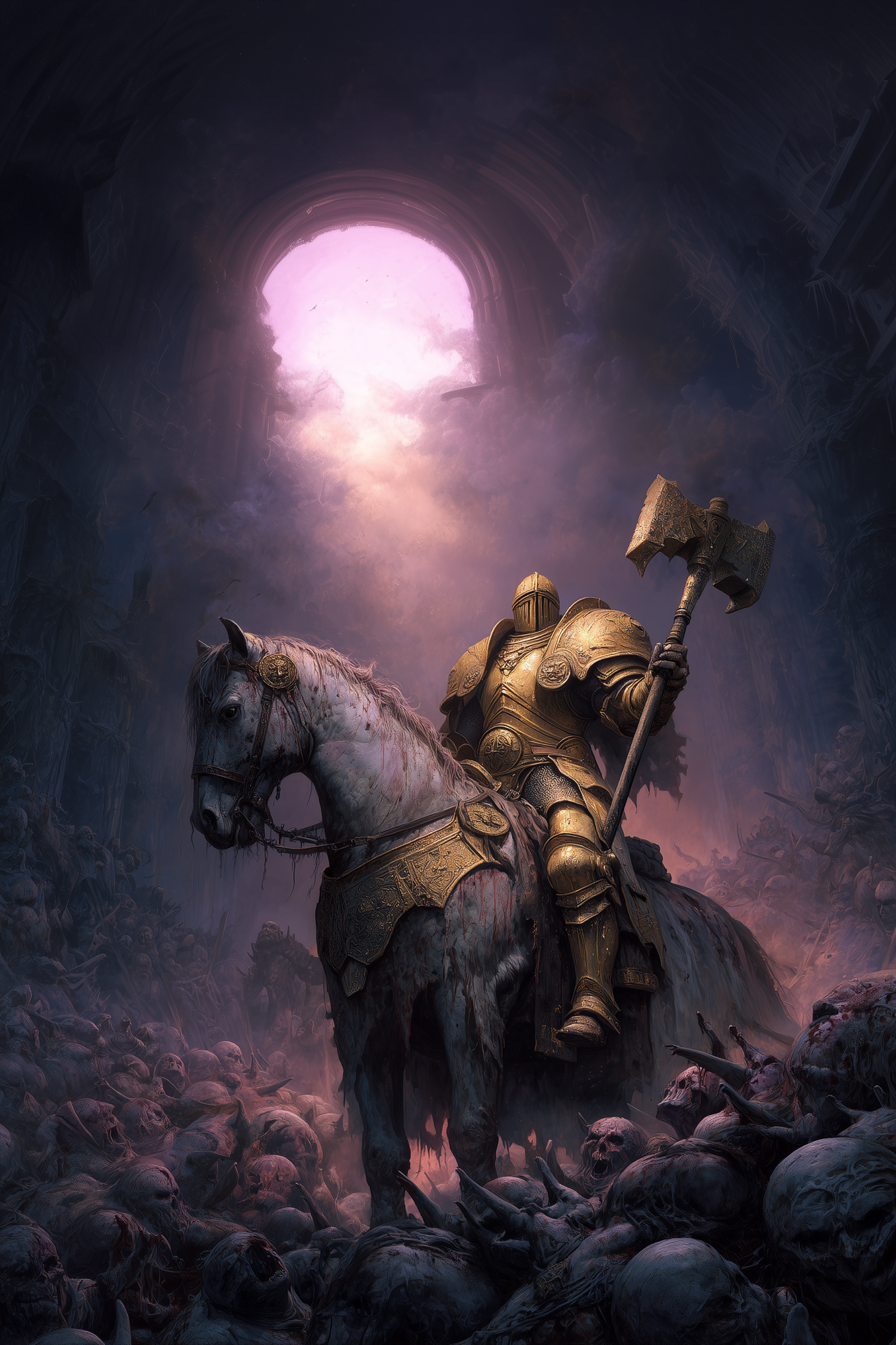
OPENING CONDITION
Why the Order Exists
The world did not begin to fail loudly.
It did not fracture in a single moment, nor did it announce its decline through cataclysm. It thinned. Corridors formed where none had existed. Regions became harder to live in, not because of war or famine, but because continuity itself began to resist habitation.
Demonic manifestation did not arrive as invasion. It accumulated.
Undead persistence did not spread as plague. It settled.
Both followed the same pattern. Not escalation, but endurance.
Most powers of Auremn responded when thresholds were crossed. When cities fell. When borders burned. When the problem became visible enough to justify action. This had worked before. It had always worked before.
This time, the pattern was different.
What emerged did not seek domination. It did not demand worship or territory. It simply refused to end. It repeated. It endured. It accumulated until the world around it adapted downward, growing narrower, colder, and less compatible with life.
The Order of the Radiant Grief exists because someone recognized this early.
Not as prophecy.
Not as revelation.
As observation.
AUREL-THAE
Steward of Radiant Burden
Aurel-Thae was Solkar.
Like all Solkar, he lived in symbiosis with the sun. Not reverence. Not worship. Function. Solar presence sustained him. Regulated him. Clarified him. His body and cognition aligned naturally to daylight cycles in ways no other race could replicate.
Among his people, this was unremarkable.
Solkar endured. They watched systems rise and decay across spans that rendered urgency unnecessary. They intervened when threatened directly. Otherwise, they trusted time to resolve imbalance. History supported this approach.
Aurel did not reject that logic.
He simply saw something it did not account for.
He observed zones where time no longer resolved anything. Where persistence did not soften. Where decay stalled. Where problems did not peak and collapse, but stabilized into permanent strain. He saw that what was slow for Solkar was catastrophic for others.
He understood that the world would not end.
It would become unusable.
That realization frightened him.
Not with panic.
With clarity.
Aurel did not leave his people in anger. He did not accuse them of indifference or arrogance. He left because their scale of patience exceeded the world’s margin for error.
He carried no mandate.
Only responsibility.

Solar Asymmetry
Aurel’s bond to the sun defines both his strength and his limitation.
Under direct sunlight, particularly when the sun stands high, his body functions at extraordinary capacity. Wounds close faster than they should. Fatigue recedes. Cognition sharpens. His presence stabilizes others. Solar energy flows through him without resistance.
He is not merely empowered.
He is aligned.
Under the moon, this alignment inverts.
Moonlight does not simply deprive him. It strains him. His body resists an absence it was never meant to endure. Muscles weaken. Breath shortens. Pain accumulates. Regeneration stalls. Prolonged exposure drains him physically and mentally.
He can act at night.
But it costs him.
This asymmetry shaped everything that followed.
Role in Conflict
Aurel is stronger than any paladin he commands.
He can strike harder. End faster. With precision no one else can match. But direct combat is not where his presence creates the greatest effect.
Aurel is most effective when he does not dominate.
In daylight, his proximity alters the field. Paladins endure longer. Absorption stabilizes. Errors become survivable. Fear loosens its grip. When he channels solar energy outward, it is measured. Not overwhelming. Not miraculous. Enough.
He heals to function.
He strengthens to persist.
He extends moments, not victories.
He is not a champion at the front.
He is the reason the line holds.
He fights when necessary.
He bears pain without ceremony.
And he never forgets that his death would end more than his own life.
THE ORDER OF RADIANT GRIEF
Formation and Function
The Order was not founded as an institution.
It began as practice.
Aurel gathered those who had survived proximity to persistent failure. Individuals who functioned where others did not. He did not preach. He observed. He tested tolerance. He experimented with controlled solar exposure, guided by his own biology and limits.
Most attempts failed.
Some bodies rejected the light violently. Others adapted briefly, then collapsed. A few stabilized. These few became the first paladins.
They were never meant to replace him.
They were meant to operate when he could not.
The Order formed around this necessity. Small. Disciplined. Severely limited in number. Its purpose was not to purge the world of darkness, but to prevent it from becoming unlivable.
They do not promise salvation.
They promise containment.
The Order does not worship the sun.
They rely on it.
They do not speak of hope.
They preserve function.
Grief, to them, is not emotion.
It is acknowledgment.
Acknowledgment that the sun still rises.
That the world still deteriorates.
And that both truths must be carried at once.
WITNESS FRAGMENT I
Recovered Field Log, Prior to Induction
I did not know who he was.
No one told me to look. No one announced him. I only noticed that the others shifted without instruction. Movements slowed. Voices lowered. Someone behind me stopped breathing for a moment, then remembered to start again.
He stood apart from the rest.
Not elevated. Not guarded. Just present in a way that made the space around him feel thinner. The light did not change, but it behaved differently near him. Shadows shortened. Dust in the air seemed unwilling to drift.
I did not feel watched.
I felt aligned.
It was like standing near something that had always been there, but had only just been noticed. Not holy. Not commanding. Just… correct. As if the world briefly remembered a shape it was meant to hold.
My body reacted before my thoughts did. Muscles loosened. The ache in my shoulder faded without disappearing. I could breathe deeper than I had in weeks.
He did not look at me.
That was worse.
Later, when I asked who he was, one of the paladins only said that some people feel it immediately, and some never do.
He did not say the name.
He did not need to.
LIGHT AND SOLAR PRACTICE
Use, Not Belief
The Order does not treat light as symbol.
They treat it as force.
Light, as practiced by the Order, is not summoned. It is absorbed, held, and released under constraint. The process is physical before it is metaphysical. Bodies must tolerate exposure. Nerves must adapt to altered thresholds. Cognition must remain coherent under sustained input.
This is why Aurel-Thae is essential.
He does not grant power.
He makes power bearable.
Paladins do not share his bond to the sun. Their bodies resist it. Without guidance, exposure causes disorientation, tissue damage, or neurological collapse. Early failures were not dramatic. They were quiet. Bodies stopped responding. Minds narrowed.
Through proximity to Aurel, the first stable practices emerged.
Solar absorption is learned gradually. Exposure windows are short. Recovery is mandatory. Records are meticulous. No technique is preserved if it produces long-term degradation.
Light is never used at full capacity.
Not because it cannot be.
Because it should not be.
Infusion and Stabilization
Aurel’s presence alters absorption behavior.
When he is nearby in daylight, paladins experience increased stability. Internal reservoirs fill more evenly. Discharge becomes cleaner. The body wastes less energy resisting the force it carries.
This effect is not constant.
It peaks under direct sun. It weakens in cloud, shadow, or dusk. It disappears entirely under moonlight.
Aurel does not command this effect consciously.
It occurs because of what he is.
In combat, he focuses on stabilization. Minor healing. Temporary reinforcement. Short-lived enchantments that sharpen function rather than amplify violence. His interventions extend endurance, reduce error, and prevent cascading failure.
He does not keep paladins alive indefinitely.
He keeps them alive long enough.
PALADINS AND RECRUITMENT
Who Is Taken
The Order does not recruit from temples, courts, or academies.
Paladins emerge from places where the world has already narrowed.
Candidates are identified through pattern, not promise. Individuals who continue to function in regions affected by persistent failure. Those who adapt routines rather than resist reality. Survivors who do not harden into cruelty or collapse into fear.
Many are ordinary.
Farmhands who learned to sleep lightly.
Messengers who memorized routes that shifted at night.
Guards who learned when not to draw steel.
Healers who stopped trying to cure what could only be contained.
Observation precedes contact. Sometimes for years.
When approached, candidates are offered nothing permanent. They are invited to accompany the Order. To observe. To assist. To leave at any point.
Induction is not guaranteed.
Aurel assesses tolerance personally. Initial exposure is brief. The body’s response determines continuation. Some candidates improve. Others stabilize temporarily. Many are released.
No shame follows rejection.
Those who remain are trained relentlessly. Discipline replaces belief. Repetition replaces zeal. No paladin is told they are chosen.
They are told they are useful.
WAR RHYTHM
Sun and Moon
The Order does not fight continuously.
They fight in rhythm.
Daylight is advantage. Night is cost.
Operations are planned around solar availability. Major engagements are pushed toward morning. Stabilization follows through afternoon. Withdrawal begins before dusk whenever possible.
Under the moon, Aurel weakens.
His regeneration stalls. Pain accumulates. His ability to stabilize others collapses quickly. He does not command night operations unless failure is imminent.
Paladins are trained for darkness.
They operate with stored light, reduced output, and increased risk. Discharge under moonlight produces higher degradation. Mistakes cost more. Losses occur more frequently.
This is accepted.
Night is not avoided.
It is endured.
At dawn, Aurel returns to the center. He repairs what can be repaired. He restores function where possible. He does not undo loss.
The Order measures success by survival into daylight.
WITNESS FRAGMENT II
Recovered Field Log, Induction Period
They did not tell me what would happen.
They placed me where the sun hit stone and told me to stand still. I felt nothing at first. Then pressure. Not heat. Pressure, like the air had weight.
He stood behind me.
I did not turn.
My hands shook. I wanted to move. I did not. Something settled instead. The shaking slowed. The noise in my head thinned.
Later, when they asked what I felt, I could not explain it. It was not power. It was permission. Like my body had been arguing with something for a long time and finally stopped.
That night was worse.
Without the sun, everything hurt. My chest felt hollow. Breathing took effort. I understood then why the others watched the sky so closely.
I asked one of them if it ever stopped hurting.
He said no.
He said you just learn which pain means you can continue.
ENEMIES AND PERSISTENCE
Demons and the Undead
The Order does not classify its enemies by origin.
They classify them by behavior.
Demonic entities are not treated as invaders, but as byproducts. They emerge from excess. Pressure, thought, memory, and intent that cannot dissipate coherently. They form where containment fails, most consistently from the sealed valley beneath the Hollow Peaks where The Father in Chains remains bound.
He does not command them.
He produces them.
Fragments of cognition bleed outward along established corridors. Where these fragments encounter suitable conditions, they stabilize. Once stabilized, they repeat. Not with purpose, but with persistence.
Undead continuance follows a different origin, but the same logic.
Death that does not complete. Memory without metabolism. Motion without renewal. These forms do not advance aggressively, but they harden in place. Over time, they render their surroundings incompatible with life.
The Order treats both as the same problem.
Not evil.
Unresolved continuation.
Light destabilizes these forms because it enforces termination. It disrupts repetition. It denies coherence to structures that persist beyond viability. When applied correctly, it does not cleanse. It ends.
Improper application creates recurrence.
This is why precision matters more than power.
RADIANT CRUSADES
Exceptional Measure
Containment sometimes fails.
When multiple corridors activate simultaneously, when undead saturation spreads across contiguous regions, or when pressure exceeds local tolerance, the Order initiates a Radiant Crusade.
A crusade is not a holy war.
It is a temporary concentration of force.
Paladins are recalled. Absorption limits are raised. Risk thresholds are accepted. Aurel-Thae operates continuously under sunlight, extending stabilization windows as far as his body allows.
Crusades are time-bound.
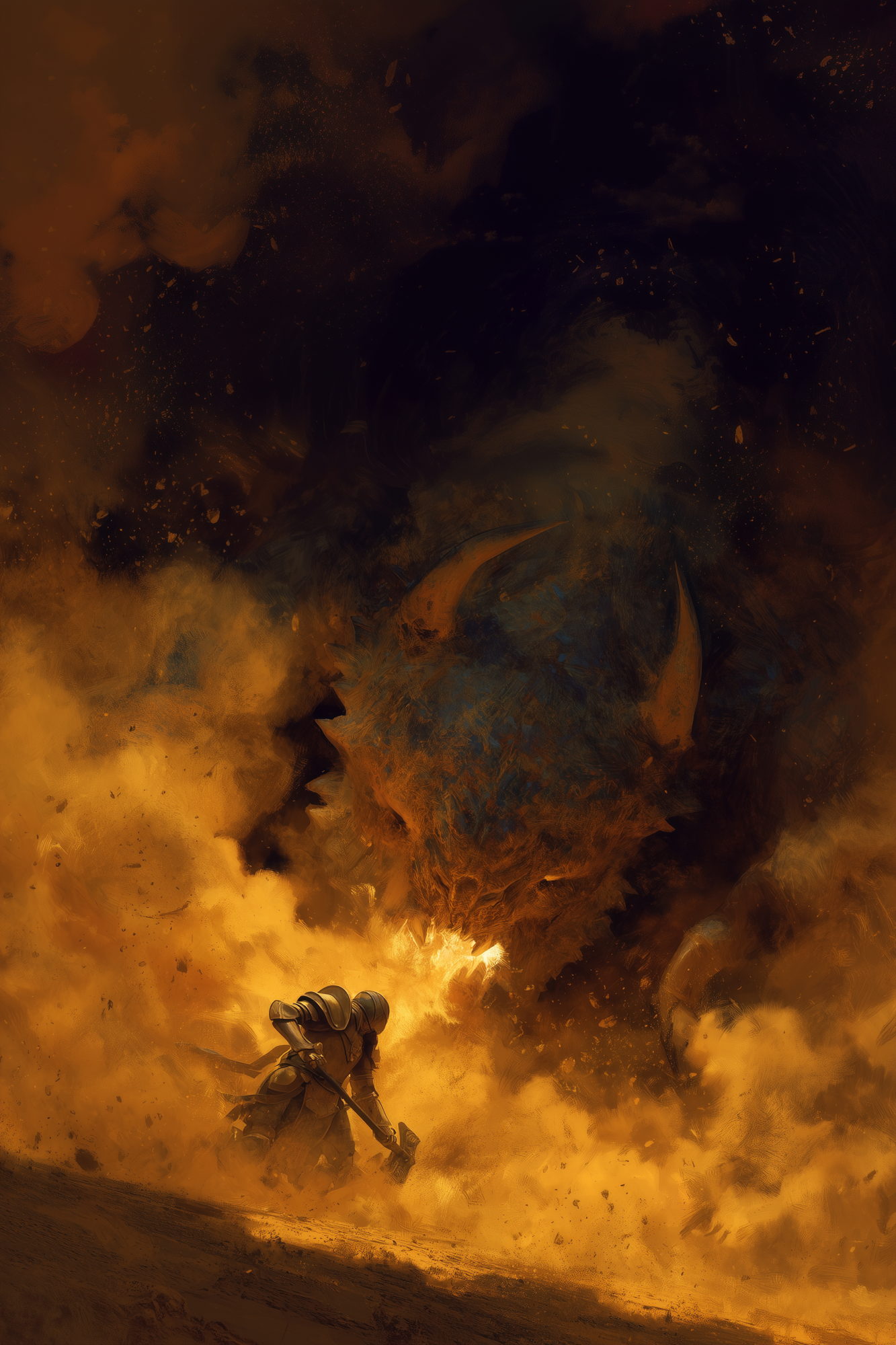
They end when pressure recedes below escalation threshold or when further action would compromise long-term viability. They do not pursue annihilation. They collapse corridors. They dissolve anchors. They force the problem back into a state that can be managed.
Losses during crusades are rarely dramatic.
They are cumulative.
Afterwards, many paladins return narrowed. Some lose access to higher discharge entirely. A few can no longer operate in daylight without pain.
Crusades succeed.
They are avoided.
COST AND ATTRITION
What Service Takes
Service within the Order alters the body permanently.
Paladins do not burn out quickly. They degrade slowly. Absorption thresholds narrow. Recovery times lengthen. Certain applications become inaccessible. Most paladins eventually specialize by necessity, not preference.
Those who lose functional capacity are not dismissed.
They remain as instructors, stabilizers, observers, or record-keepers. Their experience is considered essential. Their combat role is not.
Very few die in service.
Many outlive their usefulness.
This is acknowledged without sentiment.
Aurel bears a different cost.
Under moonlight, pain accumulates. Each night operation shortens his effective future. Each crusade extracts a toll that does not fully heal. He accepts this without comment.
He does not measure how much time he has left.
He measures how much function remains.
HOW THEY ARE SEEN
Perception
To the world at large, the Order is unsettling.
Their arrival means escalation. Their departure means abandonment. They do not reclaim. They do not rebuild. They stabilize and leave.
To political powers, they are inconvenient. They solve problems before leverage can be extracted. They refuse prolonged engagement. They do not negotiate outcomes framed as control.
To Solkar observers, Aurel-Thae is regarded with quiet distance. Not condemnation. Not approval. He is seen as a being who has allowed short-lived fear to outweigh long-term patience. Understandable. Unrelatable.
To paladins, he is not questioned.
They do not mistake him for a god.
They do not expect him to save them.
They know that when he stands near, the body works better. Pain recedes. Light obeys.
That is enough.
CURRENT STATUS
What Remains
The Order of the Radiant Grief persists.
Its numbers are stable. Its reach is limited. Its methods are refined. Aurel-Thae remains active, though increasingly constrained by the rhythm of sun and moon.
The conditions that necessitated the Order have not resolved.
They are not expected to.
The Order does not promise victory.
It promises that what refuses to end will be forced to do so, and that the world will remain usable for as long as someone is willing to stand in the light and endure the cost.
WITNESS FRAGMENT III
Recovered Field Log, Post-Induction
I understand it now.
Not the light. Not the practice. The reason.
He does not fight because he believes he will win. He fights because without him, the losses would never stop adding up.
When he stands near, things hurt less. When he leaves, we hold what he gave us until it runs out.
At night, I feel the cost more clearly. During the day, I feel the purpose.
I do not know how long this will last.
Neither does he.
That is why he keeps going.